Wednesday, June 17, 2020

The modern age of technology using multilayer PCBs


Printed Circuit Boards or shortly known as PCBs are the basis of many electronics nowadays. The PCBs that were used in the past were comparably simple and limited by manufacturing techniques, however in today’s time they are much more complex. Also these PCBs are multilayered now in comparison to earlier times. These multilayered PCBs are the new age of technology as people have started using, mobility therefore multilayer printed circuit boards are preferred by many people.

Now the question that arises would be what actually are Multilayered PCBs?

Basically, a multilayered PCB is a PCB made of three or more conductive copper foil layers. They are layered with heat-protective insulation as well as double-sided circuit boards. To connect the environment the entire construction is arranged with two layers placed on the surface sides of the PCB. There are many different printed circuit board manufacturers.


Wednesday, June 10, 2020

Types of Printed Circuit Boards– All you need to know about


The Printed Circuit Board (PCB) is a trailblazing piece of technology. It holds all the electrical components mechanically & connects them using conductive pads, tracks & other allied features. There are various types of Printed Circuit Boards used for different purposes.

PCBs are primarily categorized based on the method of construction. Some well-known types of PCB design are Single-Sided PCBs, Double-Sided PCBs, Multilayer PCBs& more. Some types of PCB are flexible whereas some are rigid. Different types of board design come with different uses. While some are easy to manufacture, some others have multiple functionalities. But, each printed circuit board are important in its area of functionality. Read on to know more about the types of Printed Circuit Boards & choose the best PCB design for PCB prototyping and manufacturing.

What are the Types of Printed Circuit Boards?

There are 6 types of PCB used by the industry to manufacture various technology-based products. These PCBs are:
1.    Single-Sided PCBs
2.    Double-Sided PCBs
3.    Multilayer PCBs
4.    Rigid PCBs
5.    Flex PCBs
6.    Rigid-Flex PCBs

What are the functions of each type of Printed Circuit Board?

As mentioned earlier, each PCB serves a different purpose as per the nature of its construction. Various components & holes are placed strategically to extract full  Here are the functions of various types of PCB:

Read more: Click here

Monday, February 10, 2020

Innovations in PCB Assembly for Modern Medicine

Modern Medicine & Medical equipment are experiencing a paradigm shift due to the ever-increasing needs of consumers. This has led to trailblazing innovations in PCB Assembly to develop functional medical equipment for ease of use & increased functionality.
Electronics & its allied aspects are an integral part of the path-breaking evolution of modern medicine. The rapid modernization of technology is bringing forth futuristic healthcare with improved & updated equipment. Traditional monitoring systems are making way for Tablets, Smartphones & iPads to ensure better recording & monitoring.


With a simple click on the smartphone, patients can get in touch with medical experts for an effortless diagnosis. Doctors can check patients real-time status via interactive tablets rather than traditional monitoring by nurses. Read on to know about the role of PCB Assembly in Modern Medicine & various modern medical equipment.

What is PCB Assembly ?

PCBA or Printed Circuit Board Assembly is the joining/soldering of electrical components to a Printed Circuit Board. PCBA primarily includes:
  1. PCB Design
  2. Development of PCB model as per the equipment/device.


Conditions for PCB assembly process:
The PCB Assembly procedure is based on varied conditions like:
  1. Electronic components & its characteristics.
  2. Purpose of the PCB for a specific device.
  3. Classification of Circuit Board.

Collection of components for PCB assembly process:

All the necessary components must be collected for assembly. Important parts include:
  1. Printed Circuit Board
  2. Components that need to be soldered.
  3. Soldering ingredients such as paste, solder wire or bar & its original material.
  4. Equipment for Soldering like soldering station, testing & SMT equipment.
Initiating PCB assembly process:

Now, Assembling the PCB for a particular device can be done. Major processes of the PCBA include:
  1. Few components have leg-like structures (protruding leads) that fit into PCB holes.
  2. Once the components are fitted, soldering can be done.
  3. Cleaning & testing must be done after soldering.
  4. If errors are found in the assembled PCB, the necessary steps must be taken to rectify them.
  5. Two Soldering processes are used namely :-
  • Traditional Soldering
  • Wave Soldering

Surface Mount Technology – One of the best PCB assembly process:


  • This Surface-mount technology does not include protruding leads for fitting.
  • As the name suggests, components are easily fitted on PCBs.
  • SMT components are termed as Surface Mount Devices (SMDs).
  • The technology utilizes an entirely different set of equipment, soldering items & components.
  • This technology is regarded as one of the best assembly processes due to easier automation, affordability, dynamic use, less space requirement, improved density & efficiency.
  • A few circuit board manufacturers in Canada use this method for modern medical equipment. Read more

Wednesday, January 29, 2020

Advancement & Future of Printed Circuit Board

Slimming down of electronic gadgets such as tablets, phones, televisions& wearable devices is not under wraps.Thanks to efficient manufacturing processes& sleek design software.Modern technology focuses on smaller, lighter & more powerful devices.Since the emergence of printed circuit boards in the late 1950s, advanced technology has propelled us forward to create smaller gadgets.

Future of PCB

Consumers now-a-days aspire for thinner, faster& more streamlined devices. In order to meet their demands,it’s no surprise that the pressure falls on high-performing PCBs for development and growth.

The Future of Printed Circuit Board Design and Implementation

While modern PCBs are versatile, there’s always room for development.In order to deliver new features that connect both consumers & professionals, product manufacturers are focusing on extracting even more power from printed circuit boards.
Let us learn about these technological advancements in printed circuit board design & see how it can change the tech world.

1. Printed Circuit Board Cameras:

Printed Circuit Board Cameras are commonly known as Board cameras.These are a type of digital camera with image sensors& optical device mounted directly on a circuit board.
Ensuring the compactness of these printed circuit board cameras, they can be slipped inside any electronic device, from a cell phone to a tablet. PCB Cameras comprise of lens, image sensor&aperture. Incorporation of camera in a board makes this small stature exceptionally versatile in an inexpensive way.

Applications:

Common applications of these cameras include:
  • Hidden cameras and surveillance modules
  • Medical Instruments
  • Cellular phones and other mobile devices like iPods and tablet computers
PCB Manufacturers in Canada are working on this technology & are expected to develop it soon.

2. 3D Printed Electronics:

3D Electronics is perhaps the most intriguing development in the world of PCBs. This technology enables designers to print metal traces & insulating polymers simultaneously. It enables quick & precise fabrication of complex and functional circuit boards & other innovative devices.

Applications:

The immense benefits of 3D-printed products in technical and manufacturing fields are paving the way for exciting new markets, applications and opportunities. These include:
  • Functional elements: For instance switches and sensors are now being integrated into 3D-printedelectronics.
  • In- house electronics: These are useful in 3D printed radio frequency (RF) electronics in-house.
  • Antennas: This technology makes it possible to develop smaller and lighter antennas and circuitry.
The advantage of using 3D electronics is that it enables circuits to take new & incredible shapes.3D PE manufacturing is the digital aspect of the production with increased automation.

3. Flexible PCB:

Designed as a replacement for traditional wire harnesses, flexible PCB or flex circuit in its purest form is an array of conductors bonded to a thin dielectric film. Flex circuits utilize flexible based material with or without flexible cover lay, allowing the board to conform to a desired shape (flex) during its application.

The major advantage of flexible PCBs is that it has a great ductility & tensile strength. This means it can handle more stress &can be easily bent when compared with conventional rigid PCBs. Moreover, these are light & thin &require less manual labour during assembly.

Applications:

Flex PCBs are often used in applications where flexibility, compactness, & production constraints are a major concern. Its common applications include:
  • Computer Keyboards
  • LCD(Liquid Crystal Display) fabrication.
  • Cellular telephones
  • Smart socks, belts and wristbands
  • Medical Equipment
PCB Manufacturers in Canada have a relevant exposure to the trending technologies & methods of manufacturing &hold the requisite certifications for manufacturing flexible PCBs. Read More

Monday, January 6, 2020

Printed Circuit Board – Game changer of the Future

Printed Circuit Board is a boon to mankind owing to its portability & dynamic usage. PCB is also considered as the building block of electronic devices. That is why most of today’s electronic equipment is fitted with the latest technology in PCB design. The adoption of PCB has increased the demand for the Printed Circuit Board Market as well.
A few significant reasons for the growth in PCB Manufacturing are the compact size, less usage of wire, easy diagnosis & repair, affordability and efficiency of PCB. According to a leading report, Global PCB market is expected to grow at a rate of 6% for the period of 2017-2021. This growth rate is prompting PCB Manufacturers in Canada to ramp up their production & meet the rising demands of the PCB market. Innovation in circuit board components is one of the primary goals of the PCB industry to cater to a variety of needs.

Popular uses of Printed Circuit Board and Flexible PCB are in wearables, smartphones, medical equipment, smart technology like voice-assistants, thermostats and much more. Read on to know about the exciting prospects of Printed Circuit Boards and the reasons for an increase in its Global demand.

4 Trailblazing applications contributing to the demand of Printed Circuit Board:

Printed Circuit Board has a wide range of path-breaking applications in today’s world. A key factor which is contributing to the utilization of PCBs is the adoption of the Internet of Things (IoT) devices. Here are 5 major implementations of PCB in the Global PCB market:

SMARTPHONES :

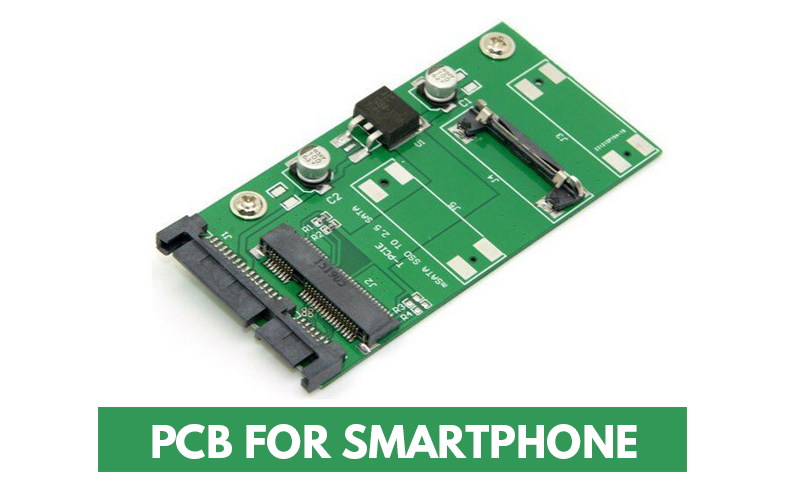
The first smartphone was invented in 1992 as is known as Simon Personal Communicator (SPC). Since then smartphones have come a long way. PCBs have been an integral part of smartphone manufacturing due to its small size & increased efficiency. As the smartphone industry is rapidly innovating, there is an increased reliance on Circuit Board Components & Printed Circuit Boards.

That is why industries of Printed Circuit Boards, Canada are emphasizing on innovations to offer next-generation technology to the Printed Circuit Board Market.

WEARABLES :

Wearable Devices have been in use since the 1980s. Printed Circuit Board or Flexible PCB are the primary components of these useful devices. Some of the wearables are smartwatches, wireless headphones, smart clothing and much more. Such devices require high-quality Printed Circuit Board. These devices are getting more sophisticated owing to an increased emphasis on providing seamless technology to consumers.

This leads to a requirement of the latest technology in PCB design & circuit board components. Leading companies of PCB Manufacturing in Toronto are innovating constantly to meet the rising demands of Global PCB market.

SMART VEHICLES :

Utilization of PCBs in vehicles is a contributing factor in accelerating the Global PCB market.  PCBs are commonly used in sensors, wireless & wired technologies and much more. The wireless technology ensures seamless connectivity with your smartphones enabling you to switch on the climate control system, unlock the vehicle & track your car effortlessly.

This results in a connected car which is gaining popularity due to emphasis on vehicle & customer safety. That is why PCB Assembly in Canada is increasing to meet the demands of Vehicle manufacturers. Read more

Friday, December 6, 2019

Rigid Flex PCB and its Advantages

Rigid flex Printed circuit board is the power-house of all the modern-day gadgets ranging from laptops, wearable to medical equipment, satellites. The primary reason is the efficiency, affordability and a variety of benefits over the old rigid boards.

These revolutionary boards are a boon to the PCB manufacturing industry since they offer portability and dynamic utility. Let us learn more about the amazing rigid flex PCBs.

How is The Rigid Flex PCB Assembled?

The rigid flex PCB contains several layers of flexible circuit connected to single or multiple boards. There further assembled based on the application’s design.
A Flex PCB uses the sophisticated 3d space process for designing purposes, it promises a plethora of advantages over traditional rigid board. The ability to bend, twist and roll the board in 3d space makes it easy for designers to obtain the required shape for the necessary application.

TYPES OF RIGID FLEX PCB:

The Rigid flex circuit board is primarily classified into two types. They are:

A. Flexible to install : This is one of the most common methods to manufacture these innovative PCBs. In this process, the circuit board folds only once during the assembly of the unit. Further changes cannot be applied after the board is folded. This process ensures that the rigid flex board is stable and reliable.
B. Dynamic flex : In this dynamic method, the PCB may need to be able to fold and bend frequently during product use. Special emphasis is needed while making this type of flexible board. This is to ensure that the flexible portion of the board can withstand repeated usage. With proper design, the circuit boards might last for a lifetime. Read More

Friday, November 22, 2019

Advancement & Future of Printed Circuit Board

Slimming down of electronic gadgets such as tablets, phones, televisions& wearable devices is not under wraps.Thanks to efficient manufacturing processes& sleek design software.Modern technology focuses on smaller, lighter & more powerful devices.Since the emergence of printed circuit boards in the late 1950s, advanced technology has propelled us forward to create smaller gadgets.

Consumers now-a-days aspire for thinner, faster& more streamlined devices. In order to meet their demands,it’s no surprise that the pressure falls on high-performing PCBs for development and growth.

The Future of Printed Circuit Board Design and Implementation

While modern PCBs are versatile, there’s always room for development.In order to deliver new features that connect both consumers & professionals, product manufacturers are focusing on extracting even more power from printed circuit boards.
Let us learn about these technological advancements in printed circuit board design & see how it can change the tech world.

1. PRINTED CIRCUIT BOARD CAMERAS:

Printed Circuit Board Cameras are commonly known as Board cameras.These are a type of digital camera with image sensors& optical device mounted directly on a circuit board.
Ensuring the compactness of these printed circuit board cameras, they can be slipped inside any electronic device, from a cell phone to a tablet. PCB Cameras comprise of lens, image sensor&aperture. Incorporation of camera in a board makes this small stature exceptionally versatile in an inexpensive way.
Applications:
Common applications of these cameras include:
  • Hidden cameras and surveillance modules
  • Medical Instruments
  • Cellular phones and other mobile devices like iPods and tablet computers
PCB Manufacturers in Canada are working on this technology & are expected to develop it soon.

2. 3D PRINTED ELECTRONICS:

3D Electronics is perhaps the most intriguing development in the world of PCBs. This technology enables designers to print metal traces & insulating polymers simultaneously. It enables quick & precise fabrication of complex and functional circuit boards & other innovative devices.
Applications:
The immense benefits of 3D-printed products in technical and manufacturing fields are paving the way for exciting new markets, applications and opportunities. These include:
  • Functional elements: For instance switches and sensors are now being integrated into 3D-printedelectronics.
  • In- house electronics: These are useful in 3D printed radio frequency (RF) electronics in-house.
  • Antennas: This technology makes it possible to develop smaller and lighter antennas and circuitry.
The advantage of using 3D electronics is that it enables circuits to take new & incredible shapes.3D PE manufacturing is the digital aspect of the production with increased automation.

3. FLEXIBLE PCB:

Designed as a replacement for traditional wire harnesses, flexible PCB or flex circuit in its purest form is an array of conductors bonded to a thin dielectric film. Flex circuits utilize flexible based material with or without flexible cover lay, allowing the board to conform to a desired shape (flex) during its application.
The major advantage of flexible PCBs is that it has a great ductility & tensile strength. This means it can handle more stress &can be easily bent when compared with conventional rigid PCBs. Moreover, these are light & thin &require less manual labour during assembly.
Applications:
Flex PCBs are often used in applications where flexibility, compactness, & production constraints are a major concern. Its common applications include:
  • Computer Keyboards
  • LCD(Liquid Crystal Display) fabrication.
  • Cellular telephones
  • Smart socks, belts and wristbands
  • Medical Equipment
PCB Manufacturers in Canada have a relevant exposure to the trending technologies & methods of manufacturing &hold the requisite certifications for manufacturing flexible PCBs.

4. ECO FRIENDLY CIRCUIT BOARDS:

With the soaring customer demands to buy new smartphone, tablet, or laptop, the older model is usually disposed.Research reveals that as much as 25 million tons of electronic waste is produced globally each year.While we take pride in our PCB designs, these boards when decomposed leach toxins into the ground.
Considering these points,biodegradable printed circuit boards (PCBs) have been developed using bio composites. These are made from natural cellulose fibers extracted from wheat gluten &banana stems.These bio-composites are chemical-free &normally considered as agricultural wastes or co-products.
Natural fibers and protein-based PCBs provide an excellent alternative to the synthetic polymer-based circuit boards.It helps us to reduce the environmental burden due to the disposal of electronic waste (e-waste). Read More